Teach the robot, then prove it learned
Imitation learning, vision-language-action models and reinforcement learning, chosen by what fits your hardware and licence, and measured on your arm rather than on someone else’s benchmark.
- Success in the ACT paper’s own study when the policy predicts chunks of 100 actions instead of one at a time.
- 1% → 44%Success in the ACT paper’s own study when the policy predicts chunks of 100 actions instead of one at a time.
- What 18 successes in 20 trials really tells you (95% interval). We run enough trials for a number to mean something.
- 68–99%What 18 successes in 20 trials really tells you (95% interval). We run enough trials for a number to mean something.
- Current VLA models that control force. They output positions, so we add the force limits around them.
- 0 of themCurrent VLA models that control force. They output positions, so we add the force limits around them.
What we do
Learned models for arms
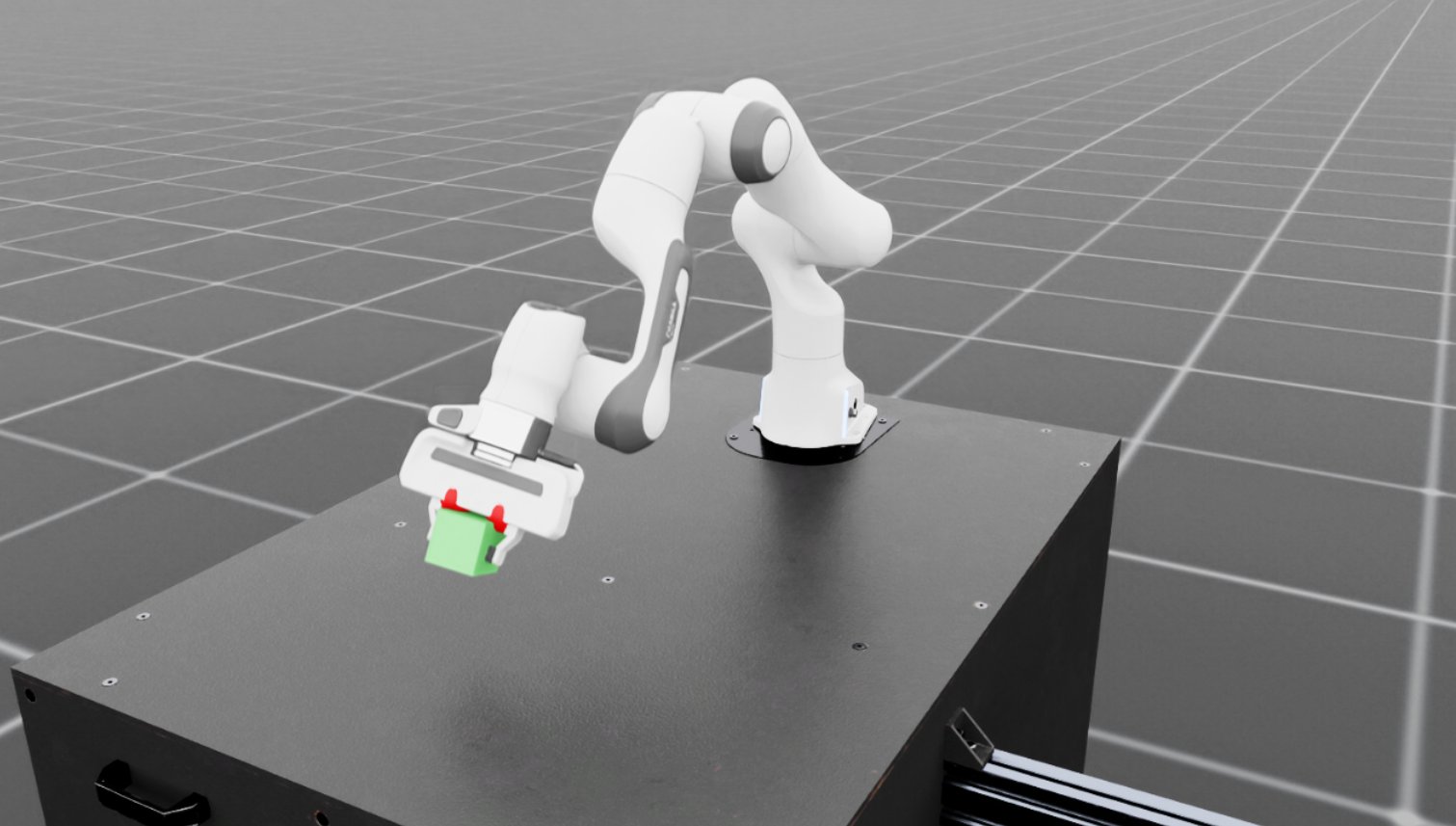
Policies trained from demonstrations, and foundation models fine-tuned for your task.
- Teleoperation and demonstration capture
- Imitation learning with ACT and Diffusion Policy
- Fine-tuning VLA models such as π0, GR00T, SmolVLA and OpenVLA
- LeRobot datasets and training pipelines
Reinforcement learning and policy training
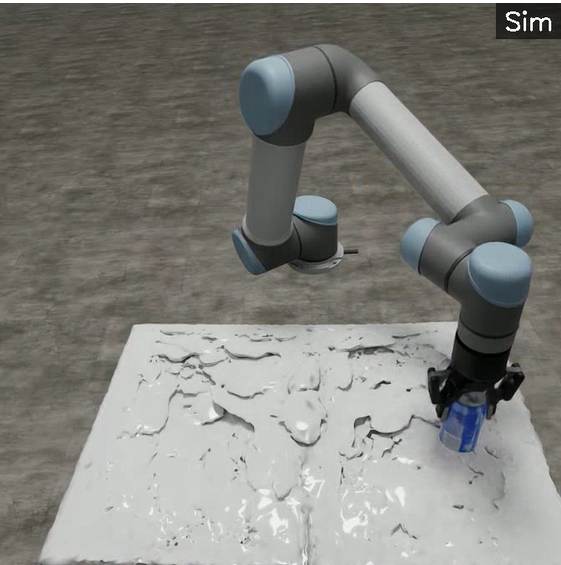
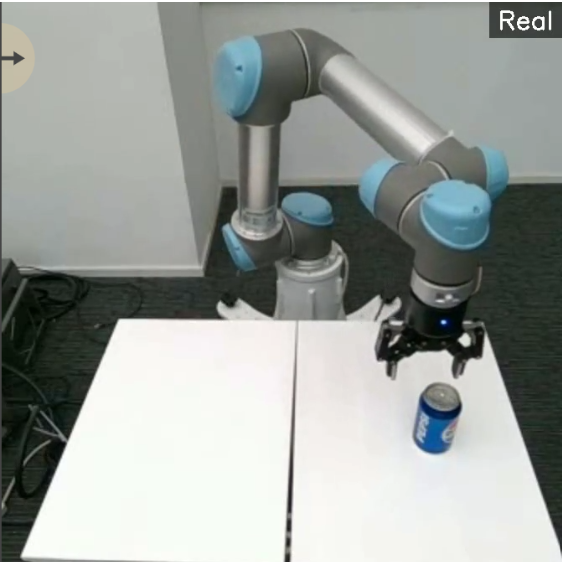
Policies that improve through practice in simulation, then transfer to the real cell.
- Reward and curriculum design
- Parallel training in Isaac Lab and MuJoCo
- Domain randomization for sim-to-real transfer
- Human-in-the-loop RL fine-tuning on hardware
Model or no model
What does the robot do when contact starts?
Programmed approach
- State machines and behavior trees
- Force and torque thresholds
- Impedance and compliance control
Learned approach
- Imitation learning from demonstrations
- Vision-language-action models
- Reinforcement learning fine-tuning
How we choose
A learned policy always runs inside a programmed safety envelope: workspace limits, force limits and a fallback behavior. We compare its success rate and cycle time against a scripted baseline, on your arm, before recommending it.
Choosing a learned model
Size, hardware and licence narrow the choice before any training starts.
| Model | Size and hardware | Licence and notes |
|---|---|---|
| SmolVLA | 450M parameters; runs on a laptop | Apache-2.0 code and weights |
| ACT | About 80M parameters; fast to train | Strong for bimanual tasks from demonstrations |
| Diffusion Policy | 100 network passes per action chunk | Smooth motions, slower to run |
| GR00T N1 | About 3B; 16 GB to run, 40 GB+ to fine-tune | NVIDIA GPU required |
| OpenVLA | 7B; a full fine-tune needs 8 A100s | MIT; LoRA fine-tuning is the practical route |
| π0 / π0.5 | Needs a large NVIDIA GPU | Some weights carry restrictive licence terms |
Tools we use
- LeRobot
- ACT
- Diffusion Policy
- SmolVLA
- π0
- GR00T
- OpenVLA
- Isaac Lab
- Stable-Baselines3
- PyTorch
What you get
- Demonstration datasets
- Trained and fine-tuned policies
- An evaluation report with confidence intervals
Read more in our notes